Strategy is about trade-offs. Not between good and bad, but between two good things.
There's a useful framework for this called an "even over" statement. You name the thing you're willing to sacrifice to protect something else. Profit margin even over revenue growth. Innovation even over predictability. And so on…
Even over statements are especially effective because they offer a simple heuristic for decision-making. One that you’ll come to be thankful for if you ever find yourself in a crisis, or any kind of high-pressure, time-sensitive situation.
And, they’re also useful when you find yourself caught between two growth engines. Like when you’re torn between the needs of your core/legacy customers, and new ones that you need to court in order to grow as the external environment evolves.
Sometimes the needs of these groups are aligned. Other times, not so much…
… Which brings us to hockey.
Two Growth Engines, One League
Over the past few months, the NHL has been riding two growth engines simultaneously.
The first is Heated Rivalry. The NHL called it "the most unique driver for creating new fans" in its history. Ticket sales jumped over 20% after it aired. LGBTQ+ hockey leagues across North America were flooded with new sign-ups. Women, younger viewers, and people who'd never watched a hockey game were suddenly buying tickets and jerseys.
The second is Olympic patriotism. The first U.S. men's gold since the Miracle on Ice. A genuinely historic, deeply emotional moment for the league’s traditional, small ‘c’ conservative base.
It was going mostly fine. Then Kash Patel came along.
If you’re out of the loop: For some reason, the FBI director was in the men’s US hockey locker room, celebrating their gold medal victory over Canada with the team. He dialed in Donald Trump, who joked he'd be "impeached" if he didn't also invite the women's team (who'd also won gold) to the White House. The guys laughed. The video went viral. The men accepted a White House visit. The women gracefully declined. Then the White House posted an AI-generated TikTok featuring Ottawa Senators captain Brady Tkachuk putting fake words in his mouth.
Suddenly, every stakeholder in the sport was caught in an awkward position.
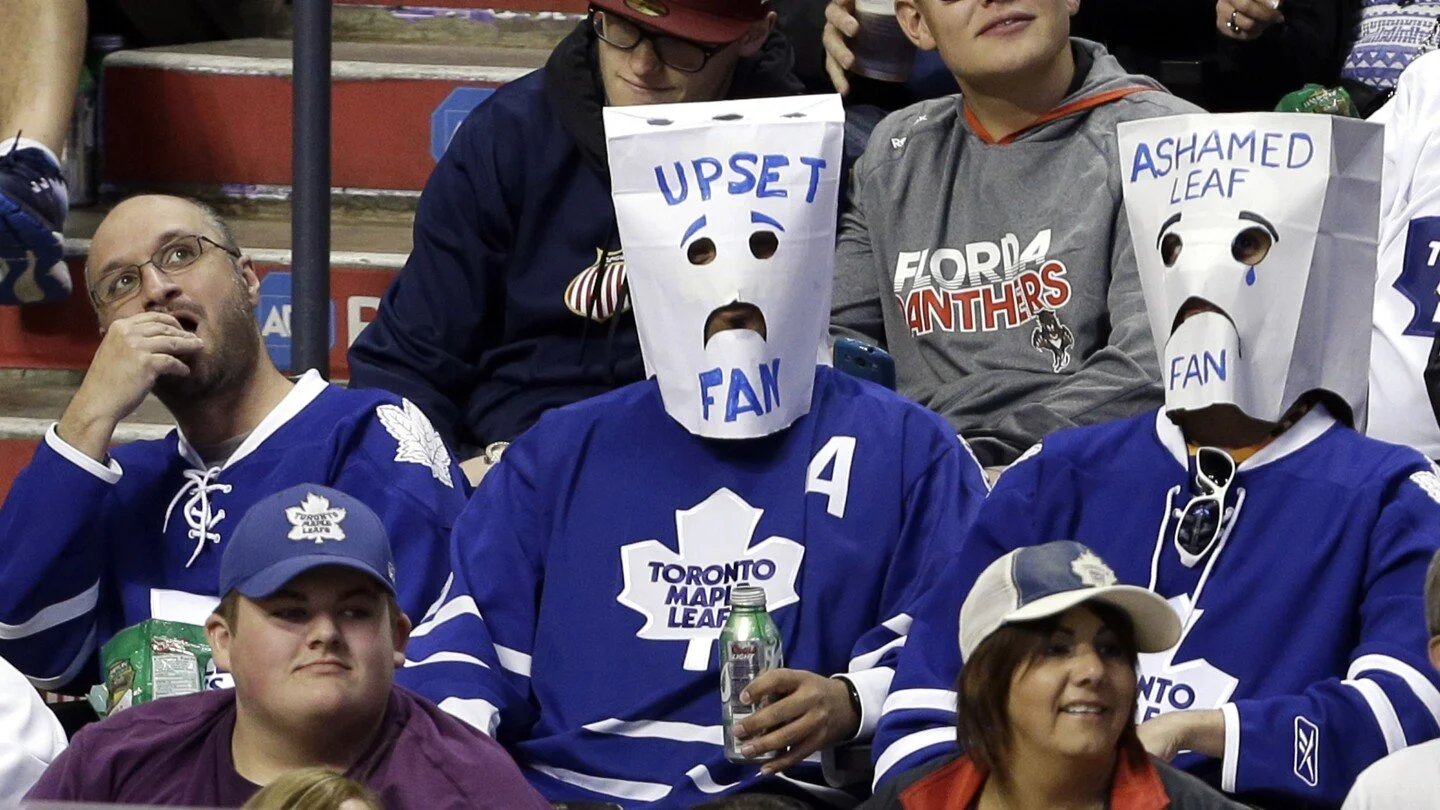
The response from the players, teams and league has been a mess - in large part because there has been no coherent narrative.
This is what happens to organizations when they don’t have a clear and easily articulated strategy. People are forced to improvise. And, the end result here is that neither of the NHL’s growth engines wound up satisfied. The NHL managed to look both insincere and weak, depending on which side you were watching from. There was no ‘even over’ logic at play here.
This Pattern Shows Up Everywhere
Brands everywhere are faced with this challenge because culture isn’t static. The customers you built your brand for, and the customers you need to grow with, don’t always want the same things. Brands like Bud Light, Harley-Davidson, and Victoria’s Secret have all experienced some version of this dilemma.
The temptation when met with this pattern is to employ a hedging strategy, which is a perfectly reasonable stop-gap. But, you still need to make a choice.
Eventually something forces the contradiction into the open. And if you haven't already decided what you're willing to trade you end up trying to please everyone, and convincing no one. Instead of a clear choice, you often get “the worst of both worlds.”
What To Do About It
Start by naming the tension. Honestly and openly. No qualifiers. No weasel words.
Most organizations know, at least intuitively, that their legacy base and their growth audience don't want exactly the same things. But very few have actually sat down and articulated where those expectations are in conflict. This needs to happen not in vague terms or with surface level insight, but with depth and specificity.
Less “Gen Z values authenticity,” and more, “this group expects the league to publicly address the joke, and doesn’t see sport and politics as being mutually exclusive”. Or, "one group sees a Pride night jersey as an important signal that promotes belonging and inclusivity, and the other sees it as performative pandering."
That means getting out in the world. Getting close to both sides. Not studying them from afar, or in separate research streams that never touch each other, but hearing from them in ways that make the friction tangible within the four walls of your organization. You need the specificity that comes from the new fan who bought skates after watching Heated Rivalry explaining what inclusion means to them in the same week that the life-long season ticket holder explains why the apology tour felt like a betrayal.
Not to decide who's right. But because you can't name a trade-off you haven't actually felt.
Then quantify what's at stake. The tension needs to be felt, but the trade-off also needs to be modelled. What does each audience actually represent - not just in current revenue, but in growth trajectory, lifetime value, and cultural influence?
The NHL knows what its legacy base represents in terms of spend on tickets, merchandise, and media rights.
And it also has the data showing a 20% spike in ticket sales tied to the Heated Rivalry. It knows that 45% of NHL fans are 55 or older, viewership is heavily skewed toward men, and that viewership has been flat-to-declining for the better part of five years now.
If you’re the NHL, you can’t afford to lose either, but you also can’t keep pretending the tension between them doesn’t exist. At some point, you have to choose.
And finally, formalize your choice. Not as a mission statement. Not as a set of values. As a single, specific trade-off that's concrete enough for someone three levels down in your organization to act on without calling a meeting.
Putting it on paper means accepting that you're going to disappoint somebody - but the alternative is disappointing everybody.
An "even over" gives your whole organization a heuristic that works under pressure. When the crisis comes — and it will — people don't need to improvise. They need to know what you’re willing to trade, and why. Everything else follows from there.
If your brand is growing, and if you're reaching people you weren't reaching before, it may be closer to this moment than you think. The question isn't whether the tension will surface. It's whether you'll be ready when it does.

David Akermanis is the founder of Faster Horses, a research and strategy consultancy based in Vancouver. He holds a Master's of Design in Strategic Foresight & Innovation and has spent 15+ years working in agencies and consultancies. His work is built around higher-quality, higher-touch recruitment, so that insights and strategies are grounded in real behaviour rather than surface-level abstractions. He writes about qualitative research, culture, and brand strategy.
Connect on LinkedIn